Showing posts with label gamewright. Show all posts

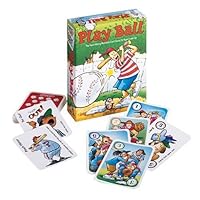
Play Ball Review

Play Ball
Average Reviews:

(More customer reviews)
Have a six year old with nothing to do? Want to find a way to interact with your children? Then try Play Ball by Gamewright. Gamewright has created a truly unique game that makes learning addition fun.
Play Ball is fast and easy to learn. The instructions are clear and easy to follow and I was up and playing in less than three minutes. What makes this game different is that way it teaches cooperation and sportsmanship to the very young.
Educators, parents and kids will spend hours learning to add to nine. A great game for those rainy days when you have nothing to do. Play ball is small enough to travel and extremely easy to store.
Play ball is priced to fit any and all budgets. Play Ball is a definite winner.

Click Here to see more reviews about: Play Ball

Playballs baseball theme comes directly from our fans requests. Sports are one way to learn about math, strategy, and competition. Players use addition and grouping skills to field teams equal to nine points in each of the four-color suit. Their opponents strategically use their action cards to block. Addition and matching skills come into play in game plays for younger players.

Buy Now

Click here for more information about Play Ball

Read More...

Clay Mania Review

Clay Mania
Average Reviews:

(More customer reviews)
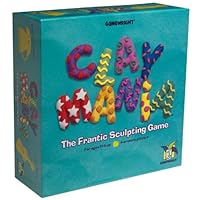
My wife and I have spent 4 years looking for this game after playing with some friends'. The game is similar to Pictionary except you use clay. The clay that comes with the game wears--but this is due to the continual play we have given it! We will simply replace the clay with some from a toy store or make our own! From the artistic to the sculpting impaired--everyone laughs at this game as trying to sculpt at a hurried pace is hard, comical, and fun. It's a hoot and quite the hit with friends and family. A big thumb's up (with clay under the fingernails I might add!)

Click Here to see more reviews about: Clay Mania

Will your fingers work as fast as your brain and more importantly, will your sculpturelook like a fire hose instead of a trombone? Sink your hands into this fast action party game. You have 45 seconds to squish, squash, and sculpt a mound of clay into anobject that your teammates can guess what it is you're making.You can animate the clay but you're not allowed to say a word.Michelangelo detail is not needed - fast sculpting and creative thinking are all that is required.

Buy Now

Click here for more information about Clay Mania

Read More...

Gamewright the Legend of Landlock, the Mythical Map Strategy Game Review

Gamewright the Legend of Landlock, the Mythical Map Strategy Game
Average Reviews:

(More customer reviews)
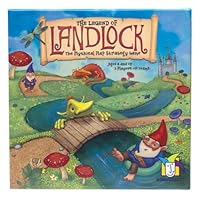
My family has an entire closet dedicated to games but Landlock is the one we reach for the most. From the toddler who enjoys making maps with the sturdy little pieces to the grown-ups who hold grudge matches in the evenings, everyone loves it. Adult guests might look at you funny when you bring out the "gnome game" but only until you've whipped 'em a few times. The game box is also small, making it easy to toss into a suitcase or picnic basket.

Click Here to see more reviews about: Gamewright the Legend of Landlock, the Mythical Map Strategy Game

In Landlock, strategy rules! Take turns placing tiles next to one another, until lo and behold, you've created a magic place where critters skitter and gnomes roam. Make a continuous path or stream around Landlock and you score big points. Discover a dragon or match up gnomes for extra credit. But watch out... your opponent will try to stop you in your tracks. The player with the highest score rules the land. 2 Players Ages 8+

Buy Now

Click here for more information about Gamewright the Legend of Landlock, the Mythical Map Strategy Game

Read More...

Maya Madness : The Mysterious Numbers Card Game Review

Maya Madness : The Mysterious Numbers Card Game
Average Reviews:

(More customer reviews)
This is a great educational game: it is fun and in no time kids learn the concept of negative numbers. It is rated for kids 10 and up, but I've played with my son who is 5 and he has no problem playing this game, though he did not want to sit through my explanation of what a negative number was (which didn't affect his game playing).
The game comes with a ruler/measuring strip with which kids can do their calculation visually. The strip is not as good as I would like--I wish they put some sort of slider on to help kids keep track of the current sum, but it works nonetheless.
The key is for an adult to play a few rounds with the kids and teach them how the game works. We love it in our family. Like many of the Gamewright games, it has a very specific range in educational value. If your kid has trouble grasping the concept of negative numbers or adding or subtracting with negative numbers, this game just may solve the problem.

Click Here to see more reviews about: Maya Madness : The Mysterious Numbers Card Game

Among their many achievements, the Mayan civilization was the first to understand the power of zero. This card game uses their principles and symbols to bring math alive for kids and help them understand positive and negative numbers. Each player gets a number line on which they can measure their progress, from -5 to 5. They are then dealt cards with numbers on them, and secret tokens. All tokens and cards feature both Arabic numerals and Mayan number symbols. Your goal is to add and subtract your cards to reach your secret token number. But be careful or you may plunge into the world of negative numbers! Game comes with 69 cards, 20 number tokens, 4 number lines and rules. For 2 to 4 players.A 2003 Parents' Choice Recommended award winner.

Buy Now

Click here for more information about Maya Madness : The Mysterious Numbers Card Game

Read More...

Toot and Puddle Game Review

Toot and Puddle Game
Average Reviews:

(More customer reviews)
This game looked promising and the packaging is very appealing, but the game itself is very boring. My four-year old enjoyed this the first few times we played but now she really has lost interest. Not a game for the long run.

Click Here to see more reviews about: Toot and Puddle Game


Buy Now

Click here for more information about Toot and Puddle Game

Read More...

Hop To It Review

Hop To It
Average Reviews:

(More customer reviews)
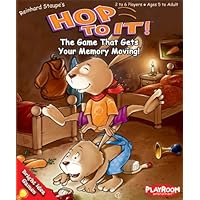
This is a great beginner game for young children - even my three year old niece quickly grasped the rules. However, unlike most popular beginner games, this one is a real challenge for children *and* adults - the nieces may not do better than I do, but I don't do better than they do either!
You have a set of tokens laid out in a line, with the picture side up. (Note - the tokens could've been made of more durable cardboard. These'll hold up, but it could've been better. Also, some of the items are a little less familiar to my nieces than I'd hope for, notably the hair dryer. But these are trivial, and you can easily remove them if it's a real problem.) You use two or three disks (an easy handicap is to have the adult play with three disks while the children play with just two) to cover up the pictures in turn. As players guess or remember what is under each disk that picture is uncovered and the next one down the line is covered. Your turn ends when you make a mistake or run out of time, and your score is the number of items you correctly remembered. Then the tokens are shuffled and laid out in a new line for the next player.
It's a LOT tougher than it sounds! The first time round, none of us managed more than two before we forgot! After a few games we were getting better, with small lists up to five or six, but nowhere near guessing most of them. So it can be a little frustrating, but in short bursts and with an encouraging attitude I think even a very young child can be good at this game - and honestly win against the grown-ups. (And when they do, they'll KNOW it's not luck.)
I definitely suggest buying this. What a way to build your memory!

Click Here to see more reviews about: Hop To It

Time to get your memory moving with Hop to It.Take a deep breath, get a good look at the row of objects, and then you're off.As soon as you remember an item that's covered, the cover is removed and placed on the next item in the line.With only 30 seconds to remember all of the objects, you'll need to be quicker than a bunny as you hop from one item to the next.

Buy NowGet 11% OFF

Click here for more information about Hop To It

Read More...

Granny Apples Review

Granny Apples
Average Reviews:

(More customer reviews)
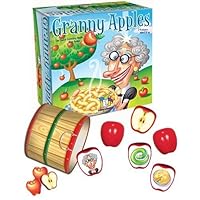
Granny Apples is a great and compact early game which teaches kids how to do simple addition while they're having fun. What more could a parent want?
The game comes with 8 wooden apple halves, which, on the "inside", have either a picture of an apple cross-section (as you'd expect) or a picture of a worm, a pie, a bird or Granny. One player rolls the 8 apples like dice, and each player must count the apples as quickly as possible. The first one to shout out the correct answer wins the round and some small apple tokens for their collection.
Each apple that lands face down counts as one apple. An apple that lands face-up with the picture of the cross-section counts as a half-apple. If the apple with the pie shows face-up, players must subtract two apples from the total. If the apple with the worm shows face-up, players must subtract one apple from the total UNLESS the apple with the bird shows face-up, in which case they cancel each other out. If Granny's face shows face-up, one apple token gets put into her basket.
So, say the player rolls the apples. 5 apples are face-down, 1 is face-up with a cross-section showing, 1 is face-up with the worm showing, 1 is face-up with the pie showing. The score for this roll is 2 and a half. The first player to shout it wins 2 and a half apple tokens. Throughout the game, because of the Granny face apple, Granny's "basket" will slowly fill up. When her basket contains twelve apples, the player with the most apples wins. This is a tremendously fun game that teaches kids addition, subtraction and even basic fractions (halves) all while having fun! What's not to love?

Click Here to see more reviews about: Granny Apples

Roll them apples!In this fast-action dice game, race against your opponents to count the exact number of apples scattered in play.Watch out for birds, worms, and apple pies that take away from the total.Count as quickly as you can and be the first to shout out the answer, but don't make a mistake or else you lose half your apples!The player with the most apples when Granny's basket is full, wins.Game comes with 8 wood apple halves, 10 half apple tokens, 75 whole apple tokens, apple basket, and rules of play.For 2- 6 Players, Ages 8 and Up.

Buy Now

Click here for more information about Granny Apples

Read More...

Take The Cake Review

Take The Cake
Average Reviews:

(More customer reviews)
This game is only so-so in every important way.
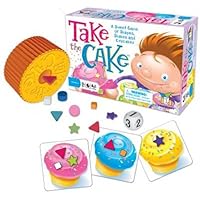
The cupcake theme is ever-so-trendy and its girly (and sugary!) look appealed to my daughter (5.5). And the little teeny tiny hard-to-track pieces *definitely* appeal to my 3-year-old, but I don't dare let him near them because one touch and they'll go flying: under the sofa, down the vents - everywhere.
Gameplay itself is not so scintillating. We had a hard time figuring out how to use the shaker fairly. The die tells you how many "shakes" you get (to make the little wooden shape pieces fall out), but there's two and then there's TWO shakes: some of the shakes were getting unfairly vigourous.
Eventually, we settled on our own rule where you just INVERT the shaker - no actual shaking at all - and see what falls out. However, if you do it that way, there's a good chance (near the end of the game) that no pieces will fall out at all. It's okay if that happens once, but if you have three shakes and nothing falls out, it gets kind of dull - turn after turn.
So we haven't quite solved the "how to shake fairly" problem.
Beyond that, matching the pieces is easy enough. I round up the pieces once they're all matched and set them aside - I don't let the kids take them with the cards for fear that they will be lost. There are EXACTLY enough wooden shape pieces to match every single card, meaning that if even one is lost, the game is unplayable.
In general, I give a lower "durability" rating for young kids' games (4 years is young!) that have many easy-to-lose pieces.
The educational value isn't that great. Once a child is four, they are usually matching shapes and colours pretty reliably.
Though this game does a decent job of introducing game-play concepts (winning, losing, taking turns), it is not the best I've seen from Gamewright, and I admit, I was disappointed.
If you're looking for a matching game for your own child or as a gift for this age group, I've found Uno Moo to be a much more durable game (and it's harder to lose the pieces!) which lets kids match up colours and animals, and introduces the idea of a "wildcard" which matches more than one colour.
Plus, its barn design has more unisex, universal appeal, making it a toy that you will probably use more often and for longer than this silly cupcake game.

Click Here to see more reviews about: Take The Cake

Take the Cake is a sweet game of shapes, shakes and cupcakes!A batch of yummy cupcakes is fresh out of the oven and it's time to decorate!Shake the sprinkle shaker and see what colorful shapes pour out.If any match a cupcake, add them to the card.Collect the most cards and winning is a piece of cake!For 2 - 4 players, ages 4 and up.Play Time:15 minutes.Awards:Oppenheim Toy Portfolio Gold AwardNational Parenting Center Seal of ApprovalDr. Toy's Best Vacation ProductsTillywig Top Fun AwardParents' Choice ApprovedContents:32 wooden shapes, 16 cupcake cards, 1 sprinkle shaker, 1 custom die and instructions.

Buy NowGet 8% OFF

Click here for more information about Take The Cake

Read More...

Turn The Tide - The Sink or Swim Strategy Card Game Review

Turn The Tide - The Sink or Swim Strategy Card Game
Average Reviews:

(More customer reviews)
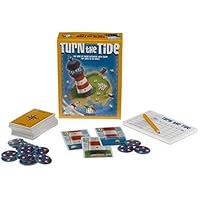
Turn the Tide is probably the most enjoyable and easy-to-learn card game I have ever played, and I have played plenty. The concept is fairly simple, even though it might seem a bit complex when first hearing it explained. This is the way I play it, which is distinct from the official rules of the game in a very minor way, but in a way that I think actually makes the game easier to understand and play. I will explain why this version is a variation of the official game at the end.
There are two decks of cards, one containing sixty cards numbered 1-60 (which we'll distinguish as 'hand cards') and another containing twenty-four cards numbered 1-12 (which we'll distinguish as 'wave cards'). In the former deck, there is one of each number (one '1', one '2', etc.); in the latter, two of each (two 1s, two 2s, etc.). The first deck is distributed to players.
Depending upon the number of players (3-5), you can decide whether to deal out all of the `hand cards' or just twelve to each, which is the minimum number required to play (and the reason the game has a five player limit). This last bit isn't that important, but I'm just clarifying that if, for example, you play with 3 players, you could either deal out 12 cards to each player or go ahead and deal all the 60 cards out, leaving each of the 3 players with 20 cards. No matter what, the players will only use 12 of those cards, so if they start with 20 they will be left with 8 extra cards at the end of the round (this variation is only important for people who have experience playing the game).
Anyway, now that each player has at least 12 cards, he looks at the top of each card for either 1.) a lifebuoy 2.) half of a lifebuoy or 3.) no lifebuoy. The player adds up all lifebuoys, for example: 1 + 0.5 + 0 + 1 + 0.5 + 0 + 0 + 1 + 1 + 0.5 + 0 + 0 = 5.5 and then takes that sum (5.5) and rounds it down (to 5). The player then receives that number of lifebuoy's (small circular cardboard chips) to use as 'lives.'
Once each player has his `hand cards' and correlated lifebuoys, the game begins. It's probably a good idea for all players to organize their 'hand cards' numerically at this point--it does not matter whether they are ordered low to high or high to low. Now, the 24-card 'wave cards' deck comes into play. The deck is shuffled and two cards from the top are flipped over to be seen by all players. Since cards are numbered 1-12, and there are two of each, either two different numbers can come out (e.g. 1 & 12 or 3 & 5), or the same number (e.g. 7 & 7). Let's start with the first possibility.
When these two 'wave cards' come out, each player has to choose from his 'hand cards' (the cards distributed earlier that number 1-60) and put one face down in front of him. When all players have chosen a 'hand card,' they flip it. Whoever has played the lowest 'hand card' (the '1' for example) takes the higher 'wave card'--in this case the 12--and puts it in front of himself face-up so all players can see. Whoever has played the highest 'hand card' (the '60' for example) takes the lower wave card--in this case the 1--and does the same. Now all played 'hand cards' are put into the players' personal discard piles (cards must be kept separate).
This is the end of the turn. At this point, whoever has the highest wave card in front of himself (the player who played the lowest 'hand card') loses a life by flipping over one of the lifebuoys he was allotted. But his 'wave card' stays in front of him for the next round. The only way to get rid of that penalty before the end of the next round is to cover up the `wave card' by receiving a different 'wave card' in the next round.
For example, in the next round, a '1' and a '2' emerge. The player with a '12' in front of him will surely lose a life if he stays with the '12.' But he will also lose a life if he plays the lowest card and receives the '2' to cover it up, because at that point the '2' will be the highest 'wave card' on the table. So that player must play the highest 'wave card' in order to get the '1' and prevent his losing a life. This may or may not be possible depending upon what cards he was dealt at the beginning of the round.
So the round plays out until all 'wave cards' have been flipped (or, under some circumstances, until all players but one have lost all of their lives). Since there are 24 cards and 2 come out in each turn, there are normally 12 turns per round, which explains why players need a minimum of 12 'hand cards' and why players will be left with extra cards if they start with more than 12.
But here's where things get tricky: at the end of the round, players return all `wave cards' (received for playing either the highest or lowest `hand card' in any given turn) to a single pile which is shuffled for the next round. Their `hand cards,' which have been kept in separate discard piles as noted above, along with their correlating lifebuoys, are passed to the player to their left (or right) for the next round.
In this way, each player is able to play with each other player's hand as it was dealt in the beginning of the game, and cannot charge that he lost simply because of how the cards were distributed. Of course, in later rounds ,players have the advantage of knowing, to some degree, who holds certain `hand cards' either because they have already played with a distribution or because they have seen that distribution played with by another player already. The game lasts as many rounds as there are players.
A few things to note: if two players have the same 'wave card' showing and that 'wave card' is the highest card on the table, they both lose a life. This could happen either because duplicate 'wave cards' came out (a '12' and a '12') or because a player receives a 'wave card' equal in amount to the highest 'wave card' already on the table (in front of another player) from a previous turn.
Also, 'death'--that is, elimination from the round, sinking--does not happen until a player must 'lose a life' but has no remaining lifebuoys to flip over. That is, if you only have 1 lifebuoy left, and you must pay the penalty for having the highest 'wave card' showing, you are still in the round, floating. Only at your next penalty payment are you eliminated from the round. If a player is eliminated from the round, his showing 'wave card' is flipped over or otherwise discounted from the game and the player showing the next highest 'wave card' must pay the life penalty and flip over a lifebuoy.
This game may sound complex, but it only requires that players know how to count from 1 to 60 and generally understand the rules (at least one person must understand the rules well, but I suggest that at least two do so that one is not charged with `making things up' or `cheating,' since some of the rules aren't intuitive and are too complex to be explained before first playing the game.
It also may seem quite mathematical, but I would argue that it depends more upon one's ability to 'get into people's heads' and figure out how and what they are thinking rather than one's mathematical aptitude--though I don't doubt that those with the ability to count cards absolutely dominate this game. In any case, it is a thoroughly enjoyable and simple game that can be played anywhere, in any language, with many different age groups, etc., and is always spontaneous and exciting. Whether for people who love card games, people looking for a fun way to pass the time with family and friends, or teachers looking to stimulate students minds and exercise their brains, I highly recommend 'Turn the Tide.'
Please note that I have no affiliation with Gamewright, that company that makes this game, or with any other game-making company or company that sells this product. I simply discovered it through a German friend in Spain, where we found ourselves regularly consumed with this and another German board game while out in an off-the-grid cabin in the middle of the woods. It was called `Land Unter' in the original, and it was equally fantastic.
I mentioned at the start that this is a variation to the original rules. The official rules (at least in the English version I recently purchased upon returning to the U.S. from Spain) state that when players flip their 'hand cards' during each turn, the player with the highest 'hand card' takes the lower 'wave card' (just like how I play) and the player with the second-highest 'hand card' takes the higher 'wave card' (rather than he who played the lowest 'hand card,' which is how I play). The reason I use this variation is primarily because it is the way I was originally taught in Spain. But more importantly, I think it is easier to remember this rule and understand the game this way. High gets low, low gets high, end of story. But play however you like, it's all about the fun!
Turn The Tide - The Sink or Swim Strategy Card Game

Click Here to see more reviews about: Turn The Tide - The Sink or Swim Strategy Card Game

Shape up or sheep out! A huge storm is threatening Shepherd's Island and it's up to you to stem the tide. In this captivating card game, try to outwit your opponents by playing number cards wisely to stay afloat. Hang on to your life preservers to win the game. However, be careful what you play or else you could end up in deep water! A great strategic game for the not too sheepish. Includes 60 weather cards, 24 water level cards, 24 life preserver tokens and rules of play. For 3 to 5 players.

Buy NowGet 5% OFF

Click here for more information about Turn The Tide - The Sink or Swim Strategy Card Game
Read More...

In A Pickle Review

In A Pickle
Average Reviews:

(More customer reviews)
My family and I love to play board & card games on a weekly basis. I am always on the lookout for new games to play. While at Barnes & Noble I found this game for 10 bucks and it looked fun and educational. What I found was that this was the most fun card game I had played since Phase 10! Anyone from children to adults can play & suceed at this game. You start by picking 5 cards per person. These cards have nouns on them such as "car, boat, woman, spider, church, student, toy, universe" and then you play 4 cards in the middle of all the players. You must lay a card on one of the 4 main cards. The card you play has to either fit in or on the object card in the middle.
Example: the 4 cards in the middle are "bus, baby, house, car"
and I have "nursery, finger, spiderweb, thief, black hole" in my hand. I play "nursery" on top of "baby". The baby goes into the nursery. The next card you play...the nursery would have to fit on or in that card (church, house, etc, the nursery is in the church) and you go until no one can play a bigger card & the person who played the biggest & last card wins the hand.
For kids, this will teach them reading, definitions,different meanings of the same word, and you have to validate why you played the card to the other players & they vote on whether you can play that card or not.
I had so much fun with this game & you can't help but laugh when other players try and validate a completely idiotic card!
I recommend this game for anyone 8 or older. I will definitely keep this game on our shelf for a long time!

Click Here to see more reviews about: In A Pickle

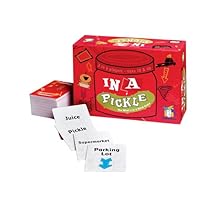
Can a giraffe fit in a phone booth' Does a sofa fit in a shopping cart' It all depends on how you size it up in this game of creative thinking and outrageous scenarios. Try to win a set of cards by fitting smaller things into bigger things -- There's some juice in a pickle, in a supermarket, in a parking lot. Play the fourth word card to claim the set, unless one of your opponents can trump with a larger word. The player with the most sets at the end is the BIG winner! Includes 300 cards and instructions. For 2 to 6 players.

Buy NowGet 22% OFF

Click here for more information about In A Pickle

Read More...

Gamewright Go Bananas Card Game Review

Gamewright Go Bananas Card Game
Average Reviews:

(More customer reviews)
I picked up this game for my 4-year-old as a stocking stuffer. It took him a few games to pick up on exactly what he needed to do, but once he did, boy, has he had a blast. We all have. This is a rolling in the floor laughing game (literally). Being the first to slap the cards and say "Go Bananas!" or "Gotcha Gator!" obviously is his goal, but is it great fun. I recommend this for the whole family.

Click Here to see more reviews about: Gamewright Go Bananas Card Game

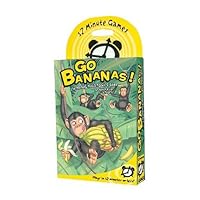
Get ready to "Go Bananas" while playing this happy, slappy card game. Be the first player to spot and slap a pair of matching opposites --- a wild monkey and a mild monkey - and you collect he cards. Keep your eyes peeled for rotten bananas and Gotcha Gators. But be careful not to slip when you slap or else you lose cards. Collect all the cards and you win! Go Bananas provides fun, laughter and practice for thinking quickly, developing eye-hand coordination and categorizing numbers and objects. And... it is a game for the mild-mannered, spunky, wild, raucous, calm, silly, and mischievous sides of all children and adults (and probably monkeys). 2 to 5 playersPlaying time: 12 minutes or less

Buy NowGet 7% OFF

Click here for more information about Gamewright Go Bananas Card Game

Read More...

Gamewright Castle Keep, the Game of Medieval Strategy and Siege Review

Gamewright Castle Keep, the Game of Medieval Strategy and Siege
Average Reviews:

(More customer reviews)
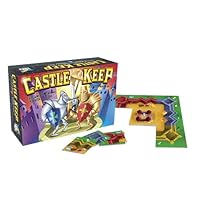
There are two ways to play this game. You can play it with basic rules. This game will last about 15-20 minutes with minimal strategy. The second way to play this game is with the advanced rules. THis game will last 30-40 minutes with much more strategy. The best part of this game is that it alows for quick rule explanation and understanding. The worst part about this game is that even with the advanced rules, there is still a huge amount of luck involved. Whatever the case. This is a great game if you are looking for a quick light strategy game.

Click Here to see more reviews about: Gamewright Castle Keep, the Game of Medieval Strategy and Siege

Transport yourself to a time when protecting your possessions meant defending your keep, the most secure part of the castle. Keeps were often called ?great towers because of their imposing structure walls over 10 feet thick and 75 feet high. They served various functions, from last resort strongholds during battle to sites of castle dungeons. While there are few remaining keeps still standing today, you can get a small taste of what it was like to build and defend a castle in this game that is simple to learn, yet full of strategy and decision-making elements that will challenge all ages. HOW TO PLAY: Raise your castle! Raze the enemy! In this clever game of medieval maneuvers, build a castle with walls, towers, and a keep by matching color, shape, or both. Will you use your game tiles to strengthen your fortress or to attack vulnerable opponents? Choose wisely, or you may find yourself in royal ruins! The first player to build a complete castle rules the land. 2 to 4 Players. Playing Time: 20 Minutes

Buy NowGet 39% OFF

Click here for more information about Gamewright Castle Keep, the Game of Medieval Strategy and Siege

Read More...

Sleeping Queens Review

Sleeping Queens
Average Reviews:

(More customer reviews)
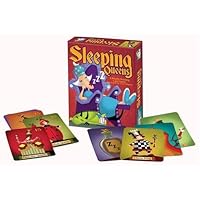
This is one of the funnest card games - we are hooked! It seems that every time we have a moment it is playing sleeping queens. The only problem we have found is that in playing with more than 3 people it ends up that no one can win and still play by the rules of the game. There needed to be more cards - 3 or 2 people playing it works great - add more than 3 and you end up in a fix. We do enjoy this game. The other thing is in just a few weeks we have worn the cards out - maybe if the materials used did not scar so easily. It is not that we are not taking care of the cards it is just that they start to lose the print around the edges on the tops so then you can start to identify cards. Otherwise, again I say we really have a lot of fun playing this game.

Click Here to see more reviews about: Sleeping Queens

Imagine a place where there?s a queen of all pancakes, a king of cookies and a pack of over-protective dragons? If this sounds like something out of a dream, it actually is! Sleeping Queens was invented by 6-year-old Miranda Evarts, who thought up the game one night when she couldn?t fall asleep. She awoke the next morning and with help from her older sister, Madeleine and her parents, Denise and Max created this wonderfully whimsical world of napping nobles. As you immerse yourself in the Evarts? fantasyland, you will find a game that helps develop memory, strategy, and elementary arithmetic skills. Just be careful when playing potion cards or you could wind up putting all the players to sleep! HOW TO PLAY: Rise and Shine! The Pancake Queen, the Ladybug Queen and ten of their closest friends have fallen under a sleeping spell and it's your job to wake them up. Use strategy, quick thinking and a little luck to rouse these napping nobles from their royal slumbers. Play a knight to steal a queen or take a chance on a juggling jester. But watch out for wicked potions and dastardly dragons! The player who wakes the most queens wins. 2 to 5 players. Playing Time: 20 Minutes

Buy NowGet 9% OFF

Click here for more information about Sleeping Queens

Read More...

Hit Or Miss Game Review

Hit Or Miss Game
Average Reviews:

(More customer reviews)
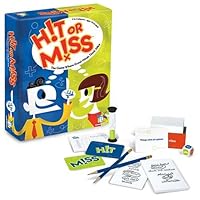
My teenage daughter and I first played this game at a friend's home. We both had such a great time... I had to buy it. We have now played it with other friends and relatives who have visited our home, and EVERYONE seems to love it! It is an easy game to play, and perfect for all ages! Unlike other games - where once you have played (or used a certain card in play) you cannot play again - with Hit or Miss, it is a new game everytime you play! New responses are given in various categories, and some are just hilarious!
We recently played with a group of friends, and the category was "Things you do to make yourself look better" - the responses varied... makeup, plastic surgery, etc. My answer got so many laughs... "Hang out with ugly people!"
My son and his fiance came for a visit with some friends a few weeks ago, and we busted out this game. Their responses were so funny, I laughed until I cried.

Click Here to see more reviews about: Hit Or Miss Game

Sharpen your pencils - and your intuition - for this quick playing "think-in-sync" party game. Draw a category card and in 45 seconds, list as many related words that come to mind. When the timer runs out, roll the die - if it lands on HIT, pick a word that you think everyone wrote; if it lands on MISS, pick one that only you wrote. Choose wisely and score big points. The player with the highest score wins. Hit or Miss - the cant MISS game that will turn your next party into a HIT! 3-8 Players Ages 10+

Buy NowGet 27% OFF

Click here for more information about Hit Or Miss Game

Read More...

Scrambled States of America Game Card Game Review

Scrambled States of America Game Card Game
Average Reviews:

(More customer reviews)
The Scrambled States of America has been in full tilt use in the home for at least a year. It was one of those impulse purchases made from an "educational" toy store (term used loosely as often times "educational toy store" just means everything costs more money). The box was smaller than the typical game, the colors far more vibrant, and the subject matter relevant in a home with young children trying to find their place in America (let alone the world).
Though the states are advertised as being 'scrambled', rest assured each state is in its proper continental US place with the exception of Hawaii and Alaska which are placed in their proper ocean though boxed in thanks to our American-centered interest here. (In other words, Canada just did not fit on the game board.)
Each state is given not only its own color but also its own personality. Some have goofy eyes, others have big toothy grins, still others wear hats and frowns. Not to worry, frowns, teeth, and goofy eyes are evenly distributed among "red" and "blue" states - this is strictly a non-partisan game.
Playing
Inside this colorful box is found:
(4)four folded maps of the United States, labeled with state name, each state in its own color. Folded maps are slick paper.
(2)two decks of cards - one for each of the fifty states containing the state name, capital name, and state nickname
The second deck of cards includes the gears for game play with various tasks each player will work at completing first. For instance, one card may say "state is east of Kansas", another "state is brown", yet again "state name has three syllables". Each deck is of typical card-stock paper, equal in size to a typical deck of playing cards.
Players begin with their own cache of states and take turns flipping over a playing card, competing to find a state in their own pile which meets the requirements laid out. First player to announce their state wins the round. Play continues until all state cards have been played with the victor having the most won state cards in his or her possession.
State Savvy
The playing objective having been shared in a nutshell, the learning objectives may now be rather clear. Play this game a few times and you'll know the names of the fifty states, play a few more times and you'll have a general feel for state location. Play this game a few times a week for a year (sigh) and you'll know name, location, capital and nickname of fifty states as well as possess a very good idea of which states are "neighbors" to one another.
While the manufacturer recommends this game for ages 8 and up - an appropriate age if independent reading is required - game play can be slightly adjusted to allow for a much younger player. Certainly going down to age 7 is fine, we've played younger so that our preschooler can play if she has a reader assisting her.
Our family strongly recommends this game - from this mommy down to the youngest player. It's fun, can get quite loud (always a good selling feature around here), and unscrambles the fifty states into easily remembered (and quite unique) pieces of America. The only downside involves paper maps which may start to tear at the folds after repeated folding and unfolding, certainly a downside worth overlooking

Click Here to see more reviews about: Scrambled States of America Game Card Game

The 50 United States of America have traded places so they could see another part of the country.Now they need your help to find their way home!Players are dealt 5 State Cards that they will try to match to the card turned over from the Scramble Card deck.Scramble Cards have clues on them that relate them to other states, such as, a state that touches at least 6 other states or a state that has 4 or more syllables.If a player can match a State Card from their pile to that Scramble Card, they'll slap their State Card and yell out the state's name. That card then goes into their Home Pile, and a new Scramble Card is turned over for the next round.Whoever has collected the most State Cards in their Home Pile by the end of the game, is the winner!This exciting card game is a great way to enrich basic knowledge of U.S. Geography.Players will learn everything from state capitals and nicknames, to the shape and location of each state.Game includes 50 State Cards, 50 Scramble Cards, 4 illustrated maps of the USA (11.5 x 6.5) and game instructions.For 2 - 4 players, ages 8 and up.

Buy Now

Click here for more information about Scrambled States of America Game Card Game

Read More...